Telephone surveys
Telephone surveys are used widely in market research, but less
so in health or social surveys. They offer an opportunity
for good coverage of the population, can be fairly complex
(given that they are administered by a trained interviewer) but
are limited in not being able to use visual effects (unless
combine with postal methods). One major issue for people conducting their own
surveys is resources - telephone surveys of any size require a
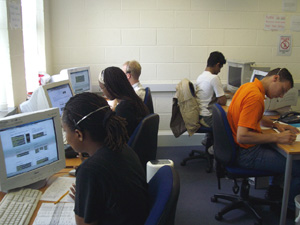
team of interviewers, preferably using a computer-assisted telephone
interviewing (CATI) system. |
 |
Issues to Consider
- Possible problem of bias
- not everyone has access to the telephone, or is available
when the telephone interviewer calls (this can be alleviated
by calling at different times of the day and week)
- Length and complexity - A
draw-back is the limited time respondents can be expected to
(and will) spend on the telephone. Survey's of 20
minutes duration are demanding!
- Difficult for sensitive
issues - although some interaction and explanation is
possible, sensitive issues are better covered using
face-to-face (or postal) surveys.
|

