Calculating the Sample Size
Lifestyle surveys which use a postal data collection
method are frequently conducted by selecting a
random sample of residents from a list of database
(e.g. centralised GP Records). A useful,
practical approach to doing this is illustrated below.
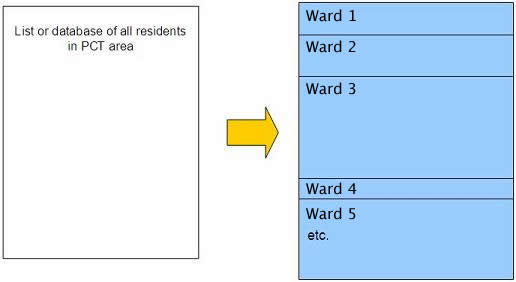
- Sort the list into ward order - all residents in
ward 1 first, then ward 2 area second, etc...
- Select systematically down the list. So if you
want a 10% sample, select every one-in-ten residents
down the list.
- This will produce a sample that
has the right proportion of residents from each ward -
a stratified sample.
A similar approach can be adopted by ordering the
list by other variables. For example, if we
wanted the right proportion of males and females in
the sample, we would order the list by gender and
then select down the list again - if the list
contained 30% men and 70% women, then the sample
selected would contain the same proportion of men
and women.
Taking this idea further, it is possible to
select a stratified sample using 'ward' and
'Gender'. This is done my ordering first by
ward, and then by gender within ward.
Selecting down the ordered list will then produce a
sample stratified by ward and gender, where the
number selected from each ward and gender will be
in proportion to the size of each sub-group. |

